
Ship traffic through the Suez Canal has risen to the highest level since the start of 2024 as some shipping companies start bringing Asia-Europe services back to the Suez-Red Sea route, while regional security risks remain high.
Lưu lượng tàu qua Kênh đào Suez tăng lên mức cao nhất kể từ đầu năm 2024 khi một số hãng tàu bắt đầu đưa dịch vụ Á – Âu trở lại tuyến Suez – Biển Đỏ, trong khi rủi ro an ninh khu vực vẫn ở mức cao.
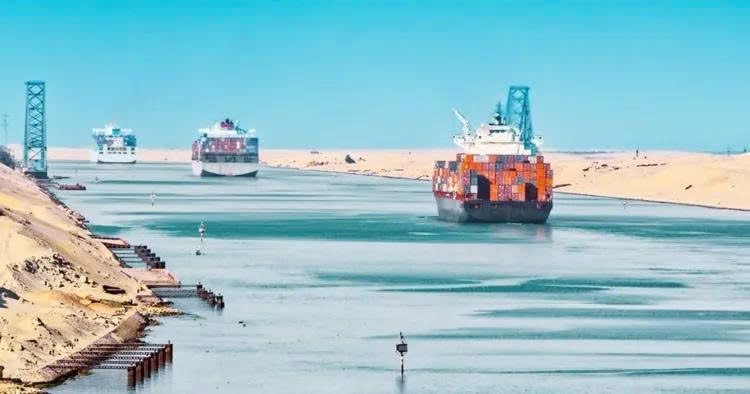
Ship traffic through the Suez Canal is picking up again as some container shipping companies start bringing their Asia-Europe services back to the Suez-Red Sea route. This is happening amid ongoing security concerns in the region, with risks in the Red Sea, the Bab-el-Mandeb Strait, and the Gulf of Aden being closely monitored.
Lưu lượng tàu qua Kênh đào Suez đang tăng trở lại khi một số hãng tàu container bắt đầu đưa các dịch vụ Á – Âu quay lại tuyến Suez – Biển Đỏ. Diễn biến này diễn ra trong bối cảnh tình hình an ninh tại khu vực vẫn phức tạp, với rủi ro tại Biển Đỏ, Eo biển Bab-el-Mandeb và Vịnh Aden tiếp tục được theo dõi sát.
According to Lloyd’s List Intelligence, traffic through the Suez Canal over the four weeks ending August 16, 2026, reached about 1,090 vessels, equivalent to 88.6 million DWT. This is the highest level since January 2024, though still around 41% lower than pre-Red Sea crisis levels at the end of 2023.
Theo Lloyd’s List Intelligence, lưu lượng qua Kênh đào Suez trong bốn tuần tính đến ngày 16/08/2026 đạt khoảng 1.090 lượt tàu, tương đương 88,6 triệu DWT. Đây là mức cao nhất kể từ tháng 01/2024, dù vẫn thấp hơn khoảng 41% so với thời kỳ trước khủng hoảng Biển Đỏ cuối năm 2023.
Meanwhile, the situation at the Strait of Hormuz continues to evolve separately. Hormuz isn’t on the Suez-Red Sea shipping route that connects Vietnam with Europe, but fluctuations there could indirectly affect fuel and marine insurance costs.
Ở chiều ngược lại, tình hình tại Eo biển Hormuz tiếp tục diễn biến riêng biệt. Hormuz không nằm trên tuyến hàng hải Suez – Biển Đỏ kết nối Việt Nam với châu Âu, nhưng những biến động tại đây có thể tác động gián tiếp đến chi phí nhiên liệu và bảo hiểm hàng hải.
Traffic through the Suez increases as shipping lines gradually return to the route
Lưu lượng qua Suez tăng khi các hãng tàu từng bước quay lại tuyến
In the four weeks up to 16/08, about 1,090 vessels passed through the Suez Canal, with a total tonnage of around 88.6 million DWT. Although still significantly lower than the pre-Red Sea crisis period, this traffic is up roughly 14% compared to the average from January to mid-June 2026.
Trong bốn tuần tính đến ngày 16/08, khoảng 1.090 lượt tàu đã đi qua Kênh đào Suez, với tổng trọng tải khoảng 88,6 triệu DWT. Mặc dù vẫn thấp hơn đáng kể so với giai đoạn trước khủng hoảng Biển Đỏ, lưu lượng này tăng khoảng 14% so với mức bình quân từ tháng 01 đến giữa tháng 06/2026.
Maersk said more than 30% of the cargo previously diverted on the Asia–Europe route via the Cape of Good Hope has returned to the Suez.
Maersk cho biết hơn 30% sản lượng hàng hóa trên tuyến Á – Âu trước đây được chuyển sang tuyến vòng qua Mũi Hảo Vọng đã quay lại Suez.
Some services from major shipping lines have also started coming back to this route. The Gemini Cooperation alliance shifted an additional AE19/SE4 service from the Cape of Good Hope route back to Suez on 10/08/2026, after the AE15 service made a similar change on 06/07. These services add a stop at Jeddah (Saudi Arabia) in the port rotation.
Một số dịch vụ của các hãng tàu lớn cũng bắt đầu trở lại tuyến này. Liên minh Gemini Cooperation đã chuyển thêm dịch vụ AE19/SE4 từ tuyến vòng qua Mũi Hảo Vọng sang Suez từ ngày 10/08/2026, sau khi dịch vụ AE15 thực hiện thay đổi tương tự từ ngày 06/07. Các dịch vụ này bổ sung điểm ghé Jeddah (Saudi Arabia) trong vòng quay cảng.
MSC also sent some ships through the Bab-el-Mandeb and Suez areas in late July and early August, including the container ship MSC Irina, which can carry 24,346 TEU.
MSC cũng đã cho một số tàu đi qua khu vực Bab-el-Mandeb và Suez vào cuối tháng 7 và đầu tháng 8, trong đó có tàu container MSC Irina với sức chở 24.346 TEU.
On August 22, the container ship Bangkok Maersk, with a capacity of about 17,200 TEU, passed through the Suez Canal for the first time on its route from Italy to Singapore. According to Captain Pata Radu, using the Suez Canal instead of going around Africa shortens the journey by about 14 days.
Ngày 22 tháng 8, tàu container Bangkok Maersk, sức chở khoảng 17.200 TEU, lần đầu tiên đi qua Kênh đào Suez trên hành trình từ Italy đến Singapore. Theo thuyền trưởng Pata Radu, việc sử dụng Suez thay vì vòng qua châu Phi giúp rút ngắn thời gian hành trình khoảng 14 ngày.
However, the frequency of returning to Suez still depends heavily on security developments in the Red Sea and Bab-el-Mandeb. Maersk and Hapag-Lloyd still have the option to revert to the Cape of Good Hope route if security conditions are unfavorable.
Tuy nhiên, tốc độ quay lại Suez vẫn phụ thuộc đáng kể vào diễn biến an ninh tại Biển Đỏ và Bab-el-Mandeb. Maersk và Hapag-Lloyd vẫn duy trì phương án quay lại tuyến Mũi Hảo Vọng nếu điều kiện an ninh không thuận lợi.
Security in the Red Sea and Gulf of Aden still remains a limiting factor.
An ninh tại Biển Đỏ và Vịnh Aden vẫn là yếu tố hạn chế
While traffic through the Suez is increasing, security risks along the southern corridor have not been eliminated.
Trong khi lưu lượng qua Suez tăng, rủi ro an ninh trên hành lang phía nam vẫn chưa được loại bỏ.
In Yemen, the port of Al-Mokha has stopped commercial operations following missile attacks in August. These developments directly affect activities in an area near the sea route connecting the Gulf of Aden to the Red Sea.
Tại Yemen, cảng Al-Mokha đã ngừng hoạt động thương mại sau các cuộc tấn công bằng tên lửa trong tháng 8. Những diễn biến này ảnh hưởng trực tiếp đến hoạt động tại một khu vực nằm gần tuyến hàng hải kết nối Vịnh Aden với Biển Đỏ.
In the Gulf of Aden, the threat of Somali piracy has also resurfaced. On August 20, the oil product tanker Sibu 1, flying the Eritrean flag, was hijacked by six armed individuals about 136 nautical miles from Al Mukalla, Yemen, and was diverted towards Somalia. This is the sixth recorded commercial ship hijacking since April 2026.
Tại Vịnh Aden, nguy cơ cướp biển Somalia cũng xuất hiện trở lại. Ngày 20/08, tàu chở sản phẩm dầu Sibu 1 mang cờ Eritrea bị sáu đối tượng có vũ trang khống chế cách Al Mukalla, Yemen, khoảng 136 hải lý và bị chuyển hướng về phía Somalia. Đây là vụ bắt cóc tàu thương mại thứ sáu được ghi nhận kể từ tháng 4/2026.
The incident happened just a few days after the Lutuf was attacked and hijacked off the coast of Somalia, showing that security risks in the Gulf of Aden still need to be taken into account when shipping companies evaluate the feasibility of navigating through Bab-el-Mandeb.
Vụ việc xảy ra chỉ vài ngày sau khi tàu Lutuf bị các đối tượng cướp biển tấn công và khống chế ngoài khơi Somalia, cho thấy rủi ro an ninh tại Vịnh Aden cần tiếp tục được tính đến khi các hãng tàu đánh giá khả năng duy trì hải trình qua Bab-el-Mandeb.
Hormuz is developing on its own, but it still affects shipping costs
Hormuz đang diễn biến độc lập, vẫn ảnh hưởng đến chi phí vận tải
The situation at the Strait of Hormuz needs to be considered separately from the Suez – Red Sea route. Hormuz is located between the Persian Gulf and the Gulf of Oman, and it’s not on the direct shipping route for containers from Vietnam to Europe via Suez. Therefore, fluctuations at Hormuz don’t necessarily mean that Vietnamese shipments to Europe have to change their route.
Tình hình ở eo biển Hormuz cần được xem xét riêng so với tuyến kênh đào Suez – Biển Đỏ. Hormuz nằm giữa Vịnh Ba Tư và Vịnh Oman, không nằm trên hải trình trực tiếp của hàng container từ Việt Nam đi châu Âu qua Suez. Do đó, những biến động tại Hormuz không đồng nghĩa với việc hàng Việt Nam đi châu Âu phải thay đổi hải trình.
The impact on Vietnamese businesses mainly comes through fuel prices, war risk insurance, and maritime security-related surcharges. Meanwhile, for services using the Suez – Red Sea route, the situation to watch closely is still the Red Sea and Bab-el-Mandeb
Tác động đối với doanh nghiệp Việt Nam chủ yếu có thể đến thông qua giá nhiên liệu, phí bảo hiểm rủi ro chiến tranh và các khoản phụ phí liên quan đến an ninh hàng hải. Trong khi đó, với các dịch vụ sử dụng tuyến Suez – Biển Đỏ, yếu tố cần theo dõi trực tiếp vẫn là tình hình tại Biển Đỏ và Bab-el-Mandeb.
Shipping companies are returning to the Suez, but not the entire network yet
Các hãng tàu đang quay lại Suez nhưng chưa phải toàn bộ mạng lưới
Current developments show that the process of bringing services back to the Suez Canal is happening step by step, rather than all at once across the entire Asia-Europe network.
Diễn biến hiện tại cho thấy quá trình đưa dịch vụ trở lại Kênh đào Suez đang diễn ra từng bước, thay vì đồng loạt trên toàn bộ mạng lưới Á – Âu.
Some services from Maersk, Hapag-Lloyd, and carriers in the Gemini network have switched back to the Suez, while many other routes still go around the Cape of Good Hope.
Một số dịch vụ của Maersk, Hapag-Lloyd và các hãng trong Gemini đã chuyển lại Suez, trong khi nhiều tuyến khác vẫn duy trì hải trình vòng qua Mũi Hảo Vọng.
For goods from Vietnam, it’s important to distinguish between direct services from Vietnam and those using transshipment at Singapore or Tanjung Pelepas. Just because an Asia-Europe service returns to the Suez doesn’t mean all Vietnamese exports are benefiting from shorter transit times.
Đối với hàng hóa từ Việt Nam, cần phân biệt giữa dịch vụ đi thẳng từ Việt Nam và dịch vụ sử dụng trung chuyển tại Singapore hoặc Tanjung Pelepas. Việc một dịch vụ Á – Âu quay lại Suez không đồng nghĩa toàn bộ hàng xuất khẩu từ Việt Nam đã được hưởng lợi từ thời gian hành trình ngắn hơn.
Impact on import-export businesses
Tác động đối với doanh nghiệp xuất nhập khẩu
- Vietnamese goods going to Europe aren’t automatically going to have shorter shipping times just because some Asia-Europe services have returned to Suez. Companies need to check the port rotation and transshipment points of each service specifically.
- Shipping time can be significantly shorter for services that actually switch from the Cape of Good Hope to Suez. The Bangkok Maersk case shows that the journey time can be reduced by about 14 days.
- There’s still a risk of route changes. Carriers might return to the Cape of Good Hope if the security situation in the Red Sea and Bab-el-Mandeb worsens.
- Fuel and insurance costs still need monitoring, especially as security risks in many maritime areas are rising at the same time.
- Hàng Việt Nam đi châu Âu chưa mặc nhiên được rút ngắn thời gian vận chuyển chỉ vì một số dịch vụ Á – Âu đã quay lại Suez. Doanh nghiệp cần kiểm tra cụ thể vòng quay cảng và điểm trung chuyển của từng dịch vụ.
- Thời gian vận chuyển có thể được rút ngắn đáng kể đối với những dịch vụ thực sự chuyển từ Mũi Hảo Vọng sang Suez. Trường hợp Bangkok Maersk cho thấy thời gian hành trình có thể giảm khoảng 14 ngày.
- Rủi ro thay đổi hải trình vẫn tồn tại. Các hãng có thể quay lại Mũi Hảo Vọng nếu tình hình an ninh tại Biển Đỏ và Bab-el-Mandeb xấu đi.
- Chi phí nhiên liệu và bảo hiểm vẫn cần được theo dõi, đặc biệt trong bối cảnh rủi ro an ninh tại nhiều khu vực hàng hải cùng lúc gia tăng.
Impact on logistics businesses
Tác động đối với doanh nghiệp logistics
- Double-check port rotations and the schedules of each service before committing delivery times to customers.
- Distinguish between direct services and transshipment services. A Eurasian service returning to Suez only directly affects Vietnamese cargo if the shipment is actually on that service.
- Prepare backup plans for delivery times for shipments with fixed deadlines, because shipping lines can still change schedules if security conditions shift.
- Track three separate factors: Suez – Bab-el-Mandeb – Cape of Good Hope, instead of using the situation at Hormuz as a direct indicator for the Vietnam–Europe route.
- Kiểm tra lại vòng quay cảng và hải trình của từng dịch vụ trước khi cam kết thời gian vận chuyển với khách hàng.
- Phân biệt dịch vụ đi thẳng và dịch vụ trung chuyển. Việc một dịch vụ Á – Âu quay lại Suez chỉ tạo tác động trực tiếp đến hàng Việt Nam nếu lô hàng thực sự được vận chuyển trên dịch vụ đó.
- Chuẩn bị phương án dự phòng về thời gian giao hàng đối với các lô hàng có thời hạn giao nhận cố định, bởi hãng tàu vẫn có thể thay đổi hải trình nếu điều kiện an ninh thay đổi.
- Theo dõi riêng ba yếu tố: Suez – Bab-el-Mandeb – Mũi Hảo Vọng, thay vì dùng tình hình tại Hormuz làm chỉ báo trực tiếp cho tuyến Việt Nam – châu Âu.
Frequently Asked Questions
Câu hỏi thường gặp
Is Vietnam directly affected by the situation at the Strait of Hormuz?
Not directly in terms of shipping routes for Vietnam-Europe container cargo. This route mainly involves the South China Sea, the Indian Ocean, the Red Sea, and the Suez Canal, and does not pass through Hormuz. However, developments at Hormuz could indirectly affect fuel prices and maritime insurance costs.
Việt Nam có bị ảnh hưởng trực tiếp bởi tình hình tại Eo biển Hormuz không?
Không trực tiếp về mặt hải trình đối với hàng container Việt Nam – châu Âu. Tuyến này chủ yếu liên quan đến Biển Đông, Ấn Độ Dương, Biển Đỏ và Kênh đào Suez, không đi qua Hormuz. Tuy nhiên, diễn biến tại Hormuz có thể tác động gián tiếp đến giá nhiên liệu và chi phí bảo hiểm hàng hải.
Which shipping lines have brought Asia-Europe services back via Suez?
Some services from Maersk, Hapag-Lloyd, and Gemini Cooperation have started using the Suez-Red Sea route again. However, the rerouting hasn’t happened simultaneously across the entire network.
Hãng tàu nào đã đưa dịch vụ Á – Âu quay lại Suez?
Một số dịch vụ của Maersk, Hapag-Lloyd và Gemini Cooperation đã bắt đầu sử dụng lại tuyến Suez – Biển Đỏ. Tuy nhiên, việc chuyển tuyến không diễn ra đồng loạt trên toàn bộ mạng lưới.
How much does going back via Suez shorten the journey?
The savings depend on the departure point, destination, and specific rotation. In the case of Bangkok Maersk, the captain said that choosing Suez instead of going around Africa saves about 14 days of voyage.
Quay lại Suez giúp rút ngắn hải trình bao nhiêu?
Mức tiết kiệm phụ thuộc vào điểm đi, điểm đến và vòng quay cụ thể. Trong trường hợp Bangkok Maersk, thuyền trưởng cho biết lựa chọn Suez thay vì vòng qua châu Phi giúp tiết kiệm khoảng 14 ngày hành trình.
| Nguồn tham khảo: Phaata, Lloyd’s List Intelligence, The Loadstar, Container News, Daily News Egypt, Reuters, Al Jazeera, UKMTO/JMIC Advisory, UN News/IMO, Al Jazeera, AP News, ONE |
Để lại một bình luận