
A. WHY VIETNAMESE EXPORTERS SHOULDN’T USE TERM “FOB”
A. VÌ SAO CÁC NHÀ XUẤT KHẨU VIỆT NAM KHÔNG NÊN SỬ DỤNG ĐIỀU KIỆN “FOB”
In international trade, many Vietnamese businesses are still accustomed to the practice of “selling FOB” – that is, goods are only delivered at Vietnamese ports, while chartering, insurance or international transportation are all undertaken by foreign partners. However, behind that “convenience” is a great disadvantage for import-export enterprises and for Vietnam’s logistics industry.
Trong thương mại quốc tế, nhiều doanh nghiệp Việt Nam vẫn quen với tập quán “bán FOB” – nghĩa là hàng hóa chỉ giao nhận tại cảng Việt Nam, còn việc thuê tàu, mua bảo hiểm hay vận chuyển quốc tế đều do đối tác nước ngoài đảm nhiệm. Tuy nhiên, đằng sau sự “thuận tiện” ấy là cả một thiệt thòi lớn cho DN XNK và cho cả nền logistics Việt Nam.
Overview of the condition of FOB under Incoterms 2020
Tổng quan về điều khoản FOB theo Incoterms 2020
FOB (Free on Board) is one of a number of international trade conditions (Incoterms) to divide responsibilities and costs between buyers and sellers. Under the term FOB, the seller will no longer be liable after the goods are delivered to the ship at the port of export. All costs of chartering, insurance and risks at sea will be borne by the buyer.
FOB (Free on Board) là một trong số các điều kiện thương mại quốc tế (Incoterms) nhằm phân chia trách nhiệm và chi phí giữa người mua và người bán. Với điều kiện FOB, người bán sẽ hết trách nhiệm sau khi hàng được giao lên tàu tại cảng xuất. Mọi chi phí thuê tàu, mua bảo hiểm và rủi ro trên biển sẽ do người mua chịu.
According to Incoterms 2020 with FOB, the seller is responsible for performing the following tasks:
Theo Incoterms 2020 với điều khoản FOB, người bán có trách nhiệm thực hiện những công việc sau:
- Production and packaging of goods
Sản xuất, đóng gói hàng hóa - Pick up empty container at depot and bring it back to the seller’s factory
Lấy container rỗng tại Depot và mang về nhà máy của người bán - Stuffing container
Đóng hàng vào container - Trucking laden container to port
Vận chuyển container hàng ra cảng - Export customs clearance
Làm thủ tục thông quan xuất khẩu - Handling at POL (Port of Loading) (Lift off at CY port, Laden container on board).
Handling tại cảng xếp hàng (hạ bãi, bốc container lên tàu).
The buyer is responsible for performing the following tasks:
Còn người mua có trách nhiệm thực hiện những công việc sau:
- Booking with shipping line
Người nhập khẩu (hoặc Forwarder) đặt chỗ với hãng tàu - Ocean Freight
Vận chuyển quốc tế bằng đường biển - Handing at POD (Port of Discharge) (Lift off to CY port, lift on truck)
Handling tại cảng dỡ hàng (hạ container xuống tàu, nâng lên phương tiện vận chu) - Import customs clearance
Làm thủ tục thông quan nhập khẩu và nộp thuế - Trucking to importer’s warehouse
Vận chuyển container hàng về kho của người mua - Unstuffing container
Dỡ hàng xuống kho người mua - Return empty container to depot/port.
Mang container rỗng về depot/cảng.
The impact of the habit of “exporting FOB” on Vietnam’s import-export and logistics enterprises
Tác động của thói quen “xuất FOB” tới doanh nghiệp XNK-Logistics Việt Nam
1. Advantages
1. Ưu điểm
- Prioritize simplicity, focus on core competencies
Ưu tiên sự đơn giản, tập trung vào năng lực cốt lõi
The seller only needs to complete the responsibility of production and deliver the goods safely onto the ship at the port of Vietnam. They do not need to participate in complex operations such as searching for shipping lines, negotiating international freight rates, handling problems arising in the process of sea transportation. This is especially suitable for SMEs with thin logistics departments, helping them focus entirely on their production and business strengths.
Người bán chỉ cần hoàn thành trách nhiệm sản xuất và giao hàng an toàn lên tàu tại cảng Việt Nam. Họ không cần phải tham gia vào các nghiệp vụ phức tạp như tìm kiếm hãng tàu, đàm phán giá cước quốc tế, xử lý các vấn đề phát sinh trong quá trình vận tải biển. Điều này đặc biệt phù hợp với các doanh nghiệp SME có bộ phận logistics mỏng, giúp họ tập trung hoàn toàn vào thế mạnh sản xuất và kinh doanh.
- Minimize operational responsibilities and associated risks
Giảm thiểu trách nhiệm vận hành và các rủi ro liên quan
Although the legal risk transfer point of FOB and CIF is the same, when issuing FOB, the seller is not the contracting party to the shipping line. Therefore, if there are disputes and complaints related to the transportation process, they will be less directly involved. The feeling of “delivery on the ship is done” in terms of operation helps businesses feel more secure.
Mặc dù điểm chuyển giao rủi ro pháp lý của FOB và CIF là như nhau, nhưng khi xuất FOB, người bán không phải là bên ký hợp đồng với hãng tàu. Do đó, nếu có tranh chấp, khiếu nại liên quan đến quá trình vận chuyển, họ sẽ ít bị liên đới trực tiếp hơn. Cảm giác “giao hàng lên tàu là xong” về mặt vận hành giúp doanh nghiệp an tâm hơn.
2. Disadvantages
2. Nhược điểm
- Cost risks: When the ship arrives late, the cost of warehousing and container storage (DEM/DET) at the port of export may arise and Vietnamese enterprises (sellers) are often responsible for paying.
Rủi ro chi phí phát sinh: Khi tàu đến chậm, chi phí lưu kho, lưu container (DEM/DET) tại cảng xuất có thể phát sinh và doanh nghiệp Việt (người bán) thường phải chịu trách nhiệm chi trả. - Loss of the right to take the initiative in transportation (Logistics): According to FOB conditions, the buyer has the right to hire a shipping line/forwarder. Because Vietnamese enterprises do not directly contact and control the transportation process, they are easily passive in arranging ships and bear high costs when waiting for ships. In addition, there may be potential risks if the buyer hires an unfamiliar, unreputable shipping line or complex workflow, thereby affecting the ability to ensure accurate delivery times for buyers in certain markets.
Mất quyền chủ động vận tải (Logistics): Theo điều kiện FOB, người mua nắm quyền thuê hãng tàu/forwarder. Do doanh nghiệp Việt không trực tiếp liên hệ và kiểm soát quy trình vận chuyển nên dễ bị động trong việc sắp xếp tàu và chịu chi phí cao khi phải chờ tàu. Ngoài ra có thể tiềm ẩn rủi ro nếu người mua thuê một hãng tàu lạ, thiếu uy tín hoặc quy trình làm việc phức tạp, từ đó ảnh hưởng đến khả năng đảm bảo thời gian giao hàng chính xác cho người mua ở một số thị trường nhất định. - Port Risk Liability: The risk is transferred from the seller to the buyer when the goods have been loaded through the ship railing at the loading port. If there is damage before boarding, the seller takes full responsibility, sometimes it is difficult to delineate responsibility if the goods are packed into container (which requires FCA rather than FOB).
Trách nhiệm rủi ro tại cảng: Rủi ro chuyển giao từ người bán sang người mua khi hàng đã được xếp qua lan can tàu tại cảng xếp hàng. Nếu có hư hỏng trước khi lên tàu, người bán chịu toàn bộ trách nhiệm, đôi khi khó phân định trách nhiệm nếu hàng hóa được đóng vào container (vốn cần dùng FCA hơn FOB). - Competitive disadvantage: The use of FOB for depreciation will cause businesses to lose the opportunity to increase profits from the provision of logistics services (freight sales, insurance premiums) when compared to selling under CIF/CFR conditions, causing Vietnamese enterprises to lose revenue from logistics services.
Bất lợi trong cạnh tranh: Việc sử dụng FOB đối với xuất khấu sẽ khiến doanh nghiệp mất đi cơ hội gia tăng lợi nhuận từ việc cung cấp dịch vụ logistics (bán cước vận tải, phí bảo hiểm) khi so với bán bằng điều kiện CIF/CFR, khiến doanh nghiệp Việt mất đi nguồn doanh thu từ dịch vụ logistics. - Fear of change: A part of Vietnamese businesses still keep the habit of using FOB because they are afraid of risks in chartering ships and buying insurance, although this reduces the ability to control the supply chain.
Tâm lý ngại thay đổi: Một bộ phận doanh nghiệp Việt vẫn giữ thói quen sử dụng FOB vì sợ rủi ro trong việc thuê tàu và mua bảo hiểm, dù việc này làm giảm khả năng kiểm soát chuỗi cung ứng. - When selling FOB, Vietnamese logistics companies will be left out of the game – there is no opportunity to sign a shipping contract or international insurance. This makes it difficult for the domestic logistics industry to expand its scale, improve its competitiveness and depend on foreign enterprises in its own “home”.
Khi bán FOB, các công ty logistics Việt Nam sẽ bị loại khỏi cuộc chơi – không có cơ hội ký hợp đồng vận chuyển hay bảo hiểm quốc tế. Điều này khiến ngành logistics trong nước khó mở rộng quy mô, khó nâng cao năng lực cạnh tranh và phụ thuộc vào doanh nghiệp ngoại trong chính “sân nhà” của mình.
Some specific example of one of the disadvantages of exporting under FOB conditions
Một số ví dụ cụ thể về nhược điểm khi xuất khẩu theo điều kiện FOB
Example 1:
Ví dụ 1:
According to the Booking of shipment V734 of company B, SI Cut-off is 14:00 on April 6, 2026. Due to some reasons, company B contacted the importer to postpone SI Cut-off to April 7 and was accepted. However, the ship docked 1 day earlier than expected, SI Cut-off was pushed to April 3. Company B did not declare the SI in time and the goods weren’t loaded on the ship.
Theo Booking của lô hàng V734 của công ty B, SI Cut-off là 14:00 ngày 6/4/2026. Do một số lý do công ty B đã liên hệ với người nhập khẩu xin lùi hạn khai SI sang ngày 7/4 và được chấp nhận. Tuy nhiên, do tàu cập cảng sớm hơn dự kiến 1 ngày nên SI Cut-off bị đẩy lên ngày 3/4. Công ty B không kịp khai SI và hàng hóa không được bốc lên tàu.
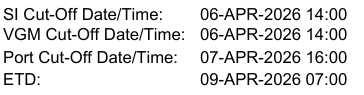
SI Cut-off by Booking
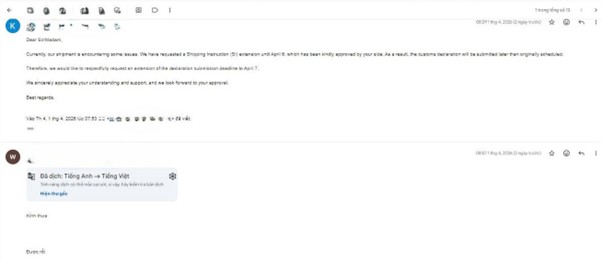
Announcement of acceptance of postponement of SI Cut-off to 7/4
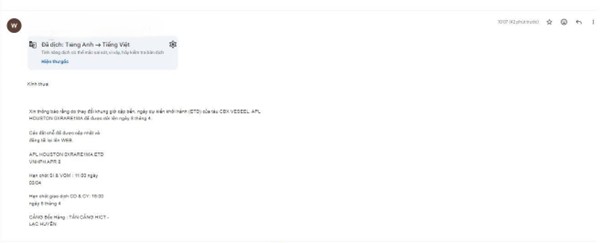
Announcement pushing SI Cut-off to 3/4
Example 2:
Ví dụ 2:
Company A has a shipment of V812 exported to the US under FOB conditions. The goods were packed into containers on March 23, sealed and ready to be unloaded at HTIT port on the same day. However, company A did not check carefully, resulting in 15 packages missing and the shipment could not be unloaded to the port as originally planned. Company A must contact the buyer to apply for a new booking and seal, but must wait for the buyer to contact FWD and wait for FWD to contact MSC shipping line.
Công ty A có lô hàng V812 xuất sang Mỹ theo điều kiện FOB. Hàng được đóng vào container vào 23/3, niêm seal và sẵn sàng hạ về cảng HTIT cùng ngày. Tuy nhiên, công ty A đã không kiểm tra cẩn thận đẫn đến đóng thiếu 15 kiện hàng và lô hàng không thể hạ về cảng như kế hoạch ban đầu. Công ty A phải liên hệ với người mua xin cấp booking và seal mới, nhưng phải chờ người mua liên hệ với FWD và chờ FWD liên hệ tới hãng tàu MSC.

Vessel/Voy Information under old Booking
After 5 days, company A received a new booking and seal from the shipping line. But in those 5 days the company had to pay additional DEM/DET costs and up to 8/4 ships brought goods out of the port of export.
Sau 5 ngày, công ty A đã nhận được booking và seal mới từ hãng tàu. Nhưng trong 5 ngày đó công ty đã phải chi trả thêm chi phí DEM/DET và tới 8/4 tàu mới mang hàng rời cảng.

Vessel/Voy Information under new Booking
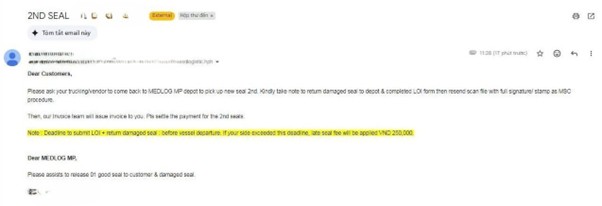
Announcement to get a new seal from MSC shipping line
Through the two specific and practical examples mentioned above, the costs incurred as well as the time to solve the problem can be completely saved and minimized if the customer (or New Way) works directly with the shipping line (if the contract is signed under the Incoterm CIF/CFR/DAP clause).
Qua hai ví dụ cụ thể và thực tế nêu trên, các chi phí phát sinh cũng như thời gian giải quyết vấn đề hoàn toàn có thể tiết kiệm và giảm thiểu được nếu khách hàng (hoặc New Way) làm việc trực tiếp với hãng tàu (nếu hợp đồng được ký kết theo điều khoản Incoterm CIF/CFR/DAP).
B. WHAT NEW WAY CAN DO TO HELP VIETNAMESE EXPORTERS
B. NEW WAY CÓ THỂ LÀM GÌ ĐỂ GIÚP CÁC NHÀ XUẤT KHẨU VIỆT NAM
From the above analysis, New Way proposes a number of solutions for Vietnamese exporters to ensure the smooth transportation of goods as follows:
Từ những phân tích trên, New Way đề xuất một số giải pháp cho các nhà xuất khẩu Việt Nam nhằm đảm bảo hàng hóa được vận chuyển suôn sẻ như sau:
- Consulting to switch to delivery conditions such as CIF/CFR or DAP to proactively charter ships, control transportation costs and cargo progress, thereby creating opportunities for Vietnamese logistics enterprises to participate more deeply in the international supply chain, affirm their capacity and improve their position.
Tư vấn chuyển sang các điều kiện giao hàng như CIF/CFR hoặc DAP để chủ động thuê tàu, kiểm soát chi phí vận chuyển và tiến độ hàng hóa, từ đó tạo cơ hội cho doanh nghiệp logistics Việt tham gia sâu hơn vào chuỗi cung ứng quốc tế, khẳng định năng lực và nâng cao vị thế. - Looking for competitive freight rates, chartering ships directly without going through the buyer’s agent to optimize transportation costs.
Tìm kiếm cước tàu cạnh tranh, thuê tàu trực tiếp mà không qua đại lý của người mua nhằm tối ưu chi phí vận chuyển. - Providing package services such as customs declaration, trucking, booking and empty shell pick-up,…
Cung cấp các dịch vụ trọn gói như thực hiện khai báo hải quan, trucking, đặt booking và lấy vỏ rỗng,… - Consulting on buying insurance for goods, supporting the handling of incidents during transportation to prevent and manage risks to goods.
Tư vấn mua bảo hiểm cho hàng hóa, hỗ trợ xử lý sự cố trong quá trình vận chuyển để phòng ngừa, quản lý rủi ro đối với hàng hóa.
Changing customs is not only a matter of being more proactive in buying and selling – it is a strategy for Vietnam to master logistics, improve import and export value and develop sustainably in global trade.
Thay đổi tập quán không chỉ là chuyện chủ động hơn trong mua bán – đó là chiến lược để Việt Nam làm chủ logistics, nâng cao giá trị xuất nhập khẩu và phát triển bền vững trong thương mại toàn cầu.
The content is written by Balance Nguyen and belongs to New Way Trading and Service Co., Ltd. Please do not copy, quote or use in any form.
Nội dung được viết bởi Balance Nguyễn và thuộc về Công ty TNHH Dịch vụ và Thương mại New Way. Vui lòng không sao chép, trích dẫn hoặc sử dụng dưới mọi hình thức.
Để lại một bình luận